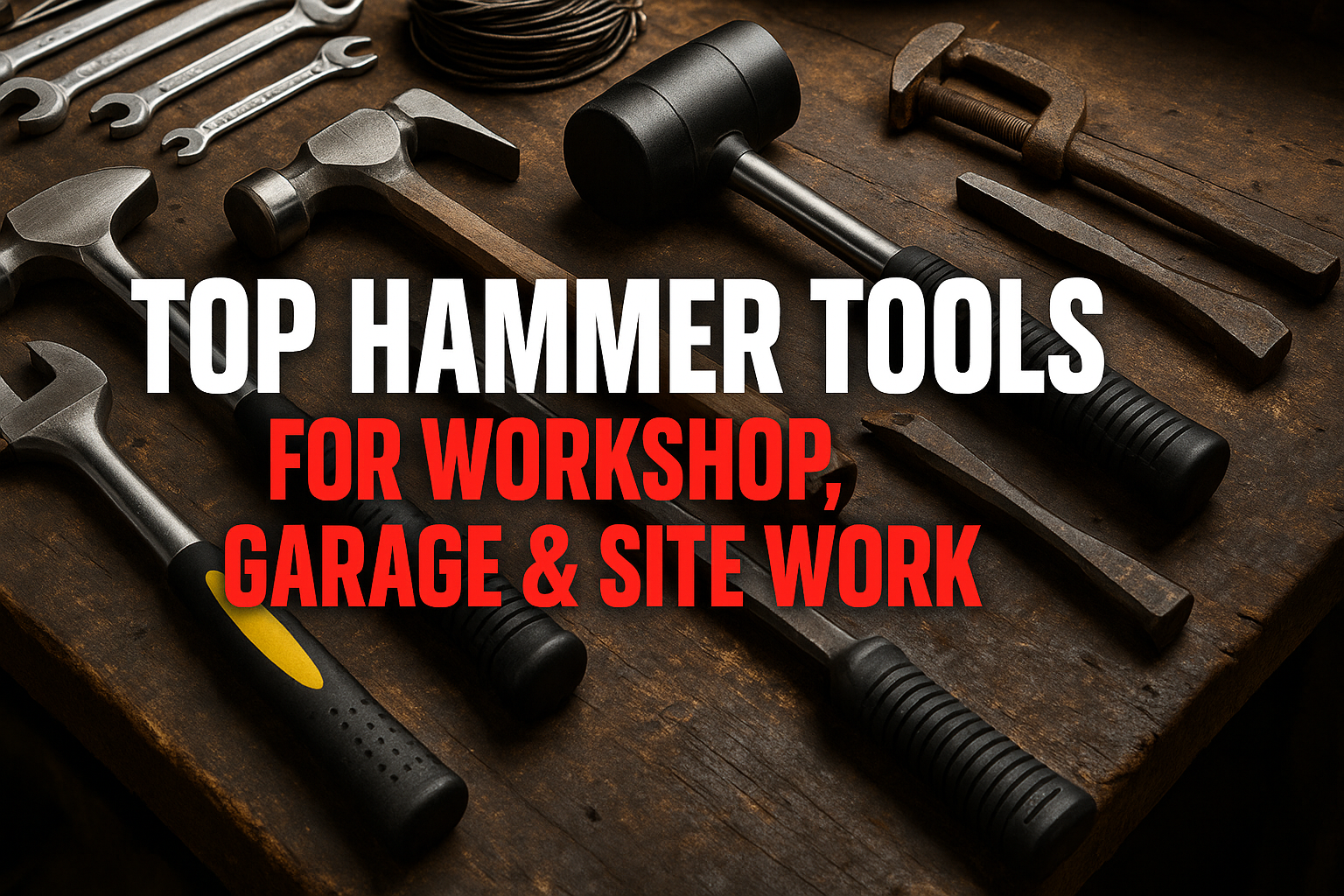
In any workshop, garage, construction site, fabrication unit, metal shop, or repair center, having the right hammer tools is essential. Despite being one of the oldest and simplest tools, hammers have evolved into a wide variety of specialized forms — each created for a specific purpose. Whether it’s precision finishing, heavy-duty striking, metal shaping, brick splitting, dent repair, or component pulling, the hammer you choose can drastically affect the accuracy, safety, speed, and quality of work.
This article is designed to help work professionals, workshop mechanics, construction contractors, industrial buyers, hardware store owners, hand tool distributors, importers, exporters, suppliers, wholesalers, and even DIY enthusiasts select the right hammer tools based on application and working environment.
Why Choosing the Right Hammer Matters
Many workers tend to use one hammer for every job, but in practice, different tasks require different levels of:
- Impact force
- Precision
- Surface protection
- Control & grip
- Durability under working conditions
For example:
- Using a Craftsman’s Hammer for tile fitting can break the tile.
- Using a Rubber Hammer for stonework will waste effort and cause no breakage.
- Using a Mason’s Hammer to shape sheet metal will damage the panel.
- Using a Sheet Metal Hammer on concrete will ruin the hammer face.
Choosing correctly ensures:
- Higher productivity
- Reduced material damage
- Better finish quality
- Lower worker fatigue
- Improved safety
This is why suppliers, wholesalers, distributors, exporters, and importers must stock hammer tools based on specific user requirements and industry usage trends.
Understanding Hammer Construction and Quality Indicators
Before buying any hammer — whether locally or through hand tools exporters or importers — evaluate these features:
| Component | What to Check | Why It Matters |
| Hammer Head | Should be drop-forged and heat-treated steel | Provides durability and prevents cracking |
| Face Type | Flat, textured, round or soft | Affects finish and accuracy |
| Handle Material | Fiberglass, steel, or hickory wood | Determines vibration control & balance |
| Grip | Rubber-coated, anti-slip pattern | Ensures safety during long working hours |
| Weight Balance | Balanced head-to-handle ratio | Reduces wrist strain and improves striking efficiency |
Professional Tip: A hammer must feel comfortable and balanced when swung — not just heavy or strong.
Top Hammer Tools for Workshops, Garages & Construction Sites
Below are the most commonly used hammer tools, along with their applications and buying recommendations for wholesalers, suppliers, importers, and distributors.
Craftsman’s Hammer (General Purpose Hammer)
The Craftsman’s Hammer is one of the most frequently used general purpose tools worldwide. It is essential in carpentry workshops, home improvement, wooden frame fabrication, and regular repair work.
Applications
- Driving and removing nails
- Woodworking and carpentry
- Light construction work
- Household and workshop repairs
Features to Look For
- Drop-forged steel head for durability
- Curved or straight claw for pulling nails
- Fiberglass or hardwood handle for shock resistance
- Weight between 450g to 800g for balanced handling
Why It’s Important for Distributors & Wholesalers
This hammer has constant retail turnover and is always in high demand among:
- Hardware shop owners
- Construction material distributors
- DIY customers
- Carpenter groups and furniture workshops
It is a fast-moving product in the tool market.
Rubber Hammer / Rubber Mallet
The Rubber Hammer (also known as Rubber Mallet) is used where controlled force is needed without damaging the work surface.
Applications
- Automotive body repair & dent adjustment
- Furniture assembly
- Tile installation & flooring alignment
- Sheet fitting and decorative finishing jobs
Buying Tips
- Look for dual-density rubber heads to reduce bounce
- A textured non-slip handle improves grip
- Ideal weight range is 300g to 600g
Market Insight for Importers & Exporters
Rubber hammers are widely purchased in:
- Construction material supply chains
- Furniture manufacturing workshops
- Automotive refinishing garages
This makes them a high-potential product line for international trade and wholesale distribution.
Slide Hammer (Pulling & Extraction Tool)
The Slide Hammer is a specialized tool used mainly in automotive repair, industrial maintenance, and mechanical workshops.
Applications
- Pulling bearings, gears, and hubs
- Straightening dents from vehicle panels
- Removing tightly fitted machine parts
Purchasing Checklist
- Smooth sliding shaft movement
- Heavy-duty steel construction
- Compatibility with multiple attachment heads
Business Value
Slide Hammers have high profit margins and are ideal for:
- Automotive tool wholesalers
- Garage equipment suppliers
- Industrial spare parts distributors
Mason’s Hammer (Brick & Stone Hammer)
Designed for cutting, trimming, shaping, and breaking bricks, stones, tiles, and masonry blocks.
Applications
- Brickwork and building construction
- Tile shaping and trimming
- Stone carving and masonry repair
Buying Advice
- Ensure heat-treated and tempered hammer head
- Handles should be shock-absorbing
- Weight range 600g to 1.2kg based on worker convenience
Market Demand
Extremely popular among:
- Construction contractors
- Government infrastructure projects
- Civil engineering suppliers
For wholesalers and distributors, Mason’s Hammers are key seasonal revenue generators.
Sheet Metal Hammer (Panel Beater Hammer)
The Sheet Metal Hammer is specifically engineered for metal shaping, dent removal, and automotive body restoration.
Applications
- Car body dent repair
- Curving and shaping metal sheets
- Fabrication and metalworking workshops
Key Buying Considerations
- Polished striking faces prevent scratching
- Should be paired with dolly blocks for best results
- Weight selection depends on hand control and job accuracy
Distribution Advantage
Sheet Metal Hammers are strongly demanded in:
- Automotive garages
- Fabrication workshops
- Vehicle detailing and repair centers
This makes them an essential tool for garage supply wholesalers and industrial tool importers.
How Importers, Distributors & Wholesalers Should Select Hammer Inventory
| Market Segment | Best Selling Hammers |
| Household & DIY markets | Craftsman’s Hammer, Rubber Hammer |
| Construction supply chains | Mason’s Hammer, Craftsman’s Hammer |
| Automotive tool dealers | Slide Hammer, Sheet Metal Hammer, Rubber Hammer |
| Industrial machine maintenance | Slide Hammer + Metalworking hammer sets |
Safety Tips for Hammer Use in Workshops & Sites
- Always wear safety goggles and gloves
- Check hammer head tightness before use
- Choose hammer weight according to strength and work need
- Avoid using metal hammers on delicate surfaces
- Replace handles or hammers that crack or loosen
Conclusion
Whether you are a professional workshop technician, a construction contractor, or a hand tool distributor, supplier, importer, wholesaler, or exporter, choosing the right hammer tools ensures better performance, longer tool life, safer operation, and improved work accuracy.
Stocking a complete range of:
- Craftsman’s Hammers
- Rubber Hammers
- Slide Hammers
- Mason’s Hammers
- Sheet Metal Hammers
ensures that every customer segment — from everyday household users to industrial fabricators — is served efficiently.
A well-selected hammer lineup increases sales, improves customer trust, and strengthens long-term business relationships.