Introduction
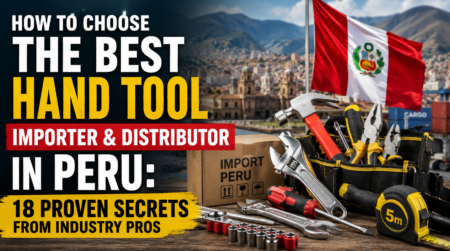
Choosing the right hand tool importer, exporter, and distributor in Peru is a crucial step for international hardware brands, B2B buyers, and sourcing agents. A reliable partner helps ensure quality, cost-efficiency, and smooth cross-border logistics. In this guide, we reveal 18 expert-level tips to help you confidently select the best tool suppliers in Peru for long-term success.
Why Peru Is a Strategic Market for Hand Tool Sourcing
Peru is fast becoming a favored destination for companies looking to tap into Latin America’s growing construction, mining, and manufacturing sectors. With established ports, expanding infrastructure, and a network of trade agreements, Peru is an ideal hub for hand tool distribution.
However, finding the right hand tool importer exporter distributor in Peru requires careful evaluation. From product quality to communication and logistics, your supplier’s capabilities can make or break your market entry.
✅ 18 Proven Secrets for Choosing the Best Hand Tool Importer & Distributor in Peru
1. Verify Legal Business Registration
Start with the essentials. Ensure the company is registered with SUNAT (Peru’s tax and customs authority) and possesses legal documentation to operate as an importer and distributor. Ask for their RUC (tax ID) and confirm its validity via government portals.
2. Focus on Industry-Specific Experience
Prioritize distributors with proven experience in hand tools and industrial equipment. Specialization matters — a distributor who understands torque ratings, handle types, and tool applications will serve your business better than a general hardware dealer.
3. Evaluate Product Range and Depth
The right supplier should offer a diverse selection, including:
- General construction tools
- Mechanical and automotive tools
- Precision tools
- OEM/private-label products
Make sure their catalog matches your needs in terms of scope and specialization.
4. Confirm International Quality Standards
Always check whether the tools meet globally recognized standards such as:
- ISO
- ANSI
- DIN
- CE
This ensures the products can be safely marketed or used in your destination countries.
5. Understand Product Origin and Supplier Sources
Inquire about the origin of the tools they import — are they from Germany, China, India, or locally made in Peru? Understanding where and how the tools are manufactured provides insight into pricing, durability, and lead times.
6. Research Local Market Reputation
Reliable distributors usually have a strong local presence. Look for:
- Business listings in Peruvian directories
- Mentions in trade publications
- Participation in trade shows and industrial expos
- Memberships in local chambers of commerce
This provides confidence that the distributor is established and trusted.
7. Check Language and Communication Skills
Fluent communication, especially in both Spanish and English, is essential when dealing with cross-border business. Miscommunication can lead to costly errors in orders, contracts, or logistics.
8. Ask for Client References
Don’t hesitate to request references from past or current clients. Ideally, these should be from similar industries or regions. Speaking with previous buyers gives you real-world insights into:
- Delivery reliability
- Response times
- After-sales support
- Professionalism
9. Assess Their Online Presence
A company’s digital footprint says a lot about its credibility. Look for:
- A modern, well-maintained website
- Updated product catalogs
- Official contact info (not just Gmail or WhatsApp)
- Activity on professional networks or B2B platforms
This shows a commitment to transparency and professionalism.
10. Check Inventory & Warehouse Capabilities
Some distributors operate on a made-to-order basis, while others maintain large local inventories. If you need rapid turnaround or consistent product availability, choose a partner who stocks tools in-country.
11. Evaluate Shipping and Logistics Proficiency
Efficient logistics is non-negotiable. Your distributor should have:
- Partnerships with freight companies
- Experience with export documentation
- Clear understanding of Incoterms
- On-time delivery history
Smooth logistics reduce delays, customs issues, and hidden costs.
12. Clarify Minimum Order Quantities (MOQs)
The best tool suppliers in Peru offer scalable MOQs to accommodate different buyers — whether you’re a large hardware chain or a startup looking to test the market. This flexibility is key for growing partnerships.
13. Request Sample Orders Before Large Commitments
Testing a new supplier? Always request a sample order. This lets you evaluate:
- Tool quality and performance
- Labeling and packaging
- Response times
- Invoice and shipping accuracy
A successful test order builds trust before scaling.
14. Ask About Warranty and Return Policies
Transparent return policies and warranty terms protect your investment. Reliable distributors clearly define:
- Coverage duration
- Warranty exclusions
- Return logistics and process
Don’t work with suppliers who are vague or evasive about these terms.
15. Inquire About Risk Management Strategies
What happens if tools are damaged in transit? How do they handle shipment delays? Ask if they provide cargo insurance or have policies to protect against unforeseen logistics issues. Professional distributors prepare for the unexpected.
16. Demand Transparent Pricing
Request an itemized quote that includes:
- Product costs
- Freight charges
- Handling and customs fees
- Taxes (if applicable)
- Surcharges or hidden fees
Transparency upfront avoids surprises at the payment stage.
17. Investigate Their Business Affiliations
Top-tier distributors often belong to recognized organizations like:
- Chambers of commerce
- Industrial trade groups
- Local export promotion councils
Such affiliations show that the company is serious, networked, and accountable.
18. Evaluate Long-Term Partnership Potential
Think beyond the first transaction. The best hand tool distributors in Peru should:
- Be open to joint marketing initiatives
- Offer flexible terms as your volume grows
- Share market insights and trends
- Assign a dedicated account manager
A distributor invested in your success becomes a valuable extension of your team.
Bonus: Questions to Ask Potential Suppliers
When you’re reaching out to potential suppliers, use this quick checklist:
✅ Are you legally registered and authorized for import/export in Peru?
✅ Can you provide references from previous international clients?
✅ What is your average lead time for orders?
✅ Do your products meet ISO, ANSI, or CE standards?
✅ Are sample orders available before placing bulk orders?
✅ Do you offer warranties and after-sales service?
✅ What Incoterms do you typically work with (FOB, CIF, EXW)?
✅ Can you accommodate scalable order volumes and urgent delivery timelines?
Their responses will help you narrow down credible candidates quickly.
Red Flags to Avoid
🚫 Vague or delayed responses to inquiries
🚫 No online presence or professional contact information
🚫 Lack of legal documentation or unwillingness to provide it
🚫 Overpromising without evidence of past performance
🚫 High-pressure tactics to commit without samples or verification
Trust your instincts — if something feels off, it probably is.
Final Thoughts: Your Path to Success Starts with the Right Supplier
Choosing the right hand tool importer, exporter, and distributor in Peru is about more than just getting competitive prices. It’s about reliability, product integrity, and building a partner you can trust for long-term growth.
Whether you’re sourcing for resale, internal use, or expansion into the Latin American market, these 18 proven secrets will guide you toward making the smartest decision possible. As Peru continues to expand its trade capabilities, the opportunities for quality tool distribution are increasing — and with the right partner, your success is within reach.
Read More: Export-Quality Wrenches, Spanners & Hand Tools for Australian Distributors